Rusty Love Typeface: Balancing Vintage Romance with Modern Design Utility
In the expansive landscape of digital typography, finding a typeface that successfully bridges the gap between nostalgic charm and contemporary functionality can be a challenge. Rusty Love emerges as a compelling solution for designers seeking to infuse their projects with a sense of history without sacrificing readability or technical versatility. This retro serif typeface is not merely a collection of letters; it is a curated design tool that celebrates expressive beauty through elegant serifs and swirly alternates. For professionals working in wedding stationery, editorial design, fashion branding, or packaging, understanding the specific character and utility of Rusty Love is essential for making informed creative decisions.
Defining the Aesthetic: What Sets Rusty Love Apart
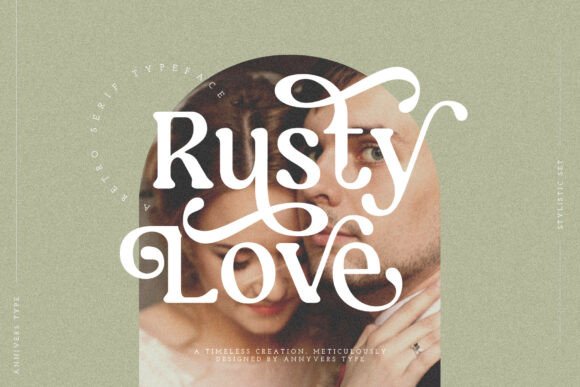
At its core, Rusty Love is defined by its ability to evoke intimacy. The font’s design philosophy centers on the warmth of old love letters and the tactile feel of handwritten correspondence from a bygone era. Unlike rigid, geometric sans-serifs that prioritize pure efficiency, Rusty Love prioritizes emotion. Each curve appears hand-crafted, introducing slight irregularities and organic flows that mimic the natural movement of a pen on paper. This attention to detail creates a visual texture that feels personal and authentic.
The typeface combines sophistication with creative flair. Its standard characters feature classic serif structures that provide a backbone of stability, while the optional swirly alternates add a layer of decorative complexity. This duality allows designers to toggle between a more restrained, professional look and a highly ornamental, artistic presentation. The result is a font that feels both timeless and fresh, avoiding the clichés often associated with overly distressed or "grunge" vintage fonts. Instead, Rusty Love offers a polished vintage aesthetic that retains clarity and elegance.
Technical Features and Accessibility
Beyond its visual appeal, Rusty Love is engineered for practical application in modern design workflows. One of its most significant advantages is the inclusion of PUA (Private Use Area) encoding. For designers who may not be experts in advanced typesetting software, this feature is invaluable. It ensures that all special characters, ligatures, and decorative elements are easily accessible without the need for additional plugins or complex coding knowledge. Users can simply select these glyphs directly from their font panel, streamlining the design process and reducing friction during the creative phase.
The font also boasts comprehensive multilingual support, making it a viable option for international projects. Whether designing for a local boutique or a global brand, the ability to maintain consistent typographic quality across different languages is crucial. Furthermore, the extensive set of ligatures and alternates allows for deep customization. Designers can swap out standard letters for more elaborate versions to create unique logotypes or headlines that stand out from generic template-based designs. This level of control empowers users to tailor the font’s personality to match the specific tone of their project.
Comparing Rusty Love to Other Typographic Styles
When evaluating typography options, it is helpful to understand where Rusty Love sits in relation to other common styles. Compared to standard script fonts, which can sometimes suffer from legibility issues due to excessive connectivity, Rusty Love maintains a strong structural integrity. Its serif base ensures that even at smaller sizes or in quick glances, the text remains readable. This makes it a safer choice for body copy in short-form contexts, such as product descriptions on packaging or introductory paragraphs in editorial layouts.
In contrast to heavy, blocky slab serifs that convey industrial strength or boldness, Rusty Love offers a softer, more refined presence. It is less about commanding attention through volume and more about inviting engagement through elegance. This distinction is critical when considering brand identity. A construction company might prefer the solidity of a slab serif, but a luxury skincare brand or a wedding planner would likely find the delicate nuances of Rusty Love more aligned with their values of care, intimacy, and refinement.
Additionally, when compared to modern minimalistic sans-serifs, Rusty Love provides a distinct emotional hook. While minimalism communicates efficiency and modernity, it can sometimes feel cold or impersonal. Rusty Love introduces a human element, suggesting craftsmanship and attention to detail. For brands looking to differentiate themselves in a saturated market dominated by clean, corporate aesthetics, this vintage-inspired approach can serve as a powerful differentiator.
Ideal Use Cases and Applications
The versatility of Rusty Love makes it suitable for a wide range of applications, though it shines brightest in contexts that benefit from a touch of romance and nostalgia. Below are some of the most effective use cases for this typeface:
- Wedding Invitations and Stationery: The font’s name and aesthetic are naturally suited for nuptial designs. It works beautifully for couple names, dates, and venue details, creating a cohesive and elegant theme that feels both traditional and personal.
- Fashion Branding: For boutiques, lingerie lines, or artisanal clothing labels, Rusty Love adds a layer of sophistication. It pairs well with high-quality imagery and minimalist layouts, enhancing the perceived value of the products.
- Editorial Titles: In magazines, blogs, or books focusing on lifestyle, travel, or history, Rusty Love can serve as an eye-catching headline font. Its expressive nature draws readers in, setting the tone for content that is reflective and engaging.
- Romantic Packaging: Products such as chocolates, perfumes, candles, or teas benefit from the warm, inviting feel of this font. It suggests that the contents are crafted with care and intended for special moments.
- Posters and Event Flyers: For art exhibitions, poetry readings, or vintage markets, Rusty Love can anchor the design, providing a clear yet artistic focal point that communicates the event's atmosphere.
Limitations and Considerations for Designers
While Rusty Love is a robust tool, it is not a universal solution for every design challenge. Understanding its limitations is key to using it effectively. Due to its decorative nature and intricate details, it is generally not recommended for long-form body text. Extended reading of highly stylized serifs can cause eye fatigue, especially in digital formats where screen resolution may not render the finest curves perfectly. For lengthy articles or reports, pairing Rusty Love with a clean, neutral sans-serif or a simple serif for the body copy is a best practice.
Another consideration is context. The vintage and romantic associations of Rusty Love may clash with brands that aim to project cutting-edge technology, financial security, or industrial ruggedness. Using this font for a cybersecurity firm or a hardware store could send mixed messages to the audience. Designers must ensure that the typographic choice aligns with the broader brand strategy and target audience expectations.
Additionally, while the PUA encoding simplifies access to special characters, designers should still exercise restraint. Overusing swirly alternates and ligatures can clutter a design and reduce readability. The goal is to enhance the message, not obscure it. Strategic placement of these decorative elements—such as using them only in initial capitals or key words—often yields the most professional and impactful results.
Making the Right Choice for Your Project
Choosing the right typeface is a balance of aesthetic preference and functional requirement. Rusty Love offers a unique fusion of vintage warmth and modern clarity, making it an excellent choice for projects that require an emotional connection with the audience. If your goal is to create a sense of intimacy, nostalgia, or elegant craftsmanship, this font provides the necessary tools to achieve that vision.
However, if your project demands strict neutrality, maximum legibility at very small sizes, or a futuristic aesthetic, you may need to explore alternative options. The decision ultimately depends on the story you want to tell. For designers willing to invest time in exploring its ligatures and alternates, Rusty Love rewards them with a distinctive voice that stands out in a crowded visual landscape. It is not just a font; it is a design partner that helps translate abstract feelings of love and beauty into tangible visual forms.
By carefully considering the strengths and tradeoffs of Rusty Love, designers can make informed decisions that elevate their work. Whether used for a subtle accent in a logo or the centerpiece of a wedding invitation, this typeface offers the flexibility and charm needed to create memorable and meaningful designs.