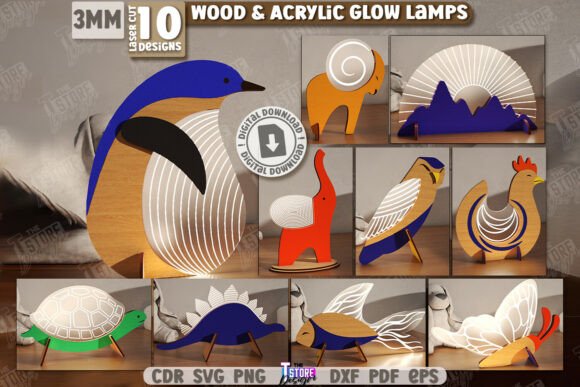
Wood Acrylic Glow Lamps Laser Cut Set
In the evolving landscape of physical product design, the intersection of digital precision and tangible warmth creates unique opportunities for creators. The Wood Acrylic Glow Lamps Laser Cut Set exemplifies this synergy, offering a versatile foundation for designers who wish to bridge the gap between screen-based graphics and real-world applications. For graphic designers and creative entrepreneurs, understanding how to leverage such assets is crucial for expanding service offerings beyond traditional print and web media.
Elevating Brand Identity Through Physical Design
While much of modern graphic design focuses on digital interfaces, there is a growing demand for tactile brand experiences. Incorporating elements like decorative lighting into a brand’s merchandise strategy can significantly enhance customer engagement. These lamps are not merely functional items; they are three-dimensional extensions of a brand’s visual identity. By utilizing high-quality CNC files, designers can ensure that the final product reflects the same attention to detail found in their logo design or packaging design.
The versatility of this bundle allows for seamless integration into various creative projects. Whether you are developing a cozy aesthetic for a children’s room or creating sophisticated home décor for adult spaces, the ability to customize these designs adds immense value. The combination of wood and acrylic creates a striking visual contrast that appeals to modern aesthetics, making it an excellent choice for clients looking to differentiate their products in a saturated market.
Technical Precision in Design Workflow
From a technical standpoint, working with laser-cut assets requires a keen understanding of file formats and machine compatibility. This digital product includes a comprehensive zip archive containing SVG, EPS, PNG, PDF, and DXF files. Each format serves a specific purpose in the design workflow:
- SVG and EPS: Ideal for vector-based editing and scaling without loss of quality.
- DXF: Recommended for users working with Lightburn to avoid dimension distortion often seen with SVGs.
- PNG and PDF: Useful for previewing designs and sharing concepts with clients before production.
Understanding these nuances ensures that your creative assets translate accurately from software to physical object. It is essential to verify that your cutting machine and software are compatible with these formats to maintain the integrity of the design. For instance, if you encounter issues with Lightburn distorting dimensions, switching to the DXF file format can provide better results, ensuring clean cuts and precise engravings.
Practical Applications for Creative Professionals
The utility of these laser-cut files extends far beyond simple night lights. They serve as excellent case studies for applying principles of visual hierarchy and composition in three-dimensional space. Here are several ways designers can utilize these assets:
- Merchandise Development: Create unique, high-margin products for online stores or craft fairs.
- Interior Styling: Offer bespoke décor solutions for residential or commercial clients.
- Gifting Solutions: Design personalized items for special occasions, leveraging the emotional appeal of warm lighting.
- Portfolio Expansion: Demonstrate versatility by showcasing both digital design skills and physical production knowledge.
When integrating these elements into broader marketing materials, consider how the warm glow of the LED lamps can be represented in social media graphics and digital marketing campaigns. High-quality renders or photographs of the finished product can enhance your professional presentation, attracting clients who value both aesthetics and functionality.
Ensuring Quality and Consistency
To achieve a polished result, pay close attention to the separation of cut and engrave lines. In this set, red lines indicate where the machine should cut, while black lines designate areas for engraving. This clear distinction simplifies the preparation process, allowing designers to focus on customization rather than technical troubleshooting. Consistency in line weights and color coding is vital for efficient production, reducing waste and ensuring that each piece meets professional standards.
Furthermore, the scalability of vector files means that these designs can be adapted to various sizes, provided the material constraints are respected. This flexibility is crucial for maintaining brand consistency across different product lines. Whether you are adjusting the size for a small bedside lamp or a larger statement piece, the underlying design principles remain intact.
If you require specific adjustments, such as different color sizes for PNG files or alternative file types, reaching out to the creator can facilitate a smoother design process. Open communication ensures that the assets meet your specific project needs, enhancing the overall quality of your output. By following these guidelines and leveraging high-quality resources, designers can create impactful, tangible products that resonate with audiences and elevate their professional portfolio.