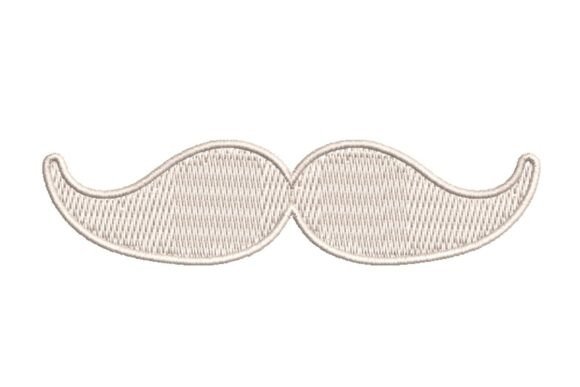
Mastering the Classic White Moustache Embroidery Design for Professional Results
The resurgence of vintage aesthetics and whimsical personalization has brought a surprising motif to the forefront of modern textile art: the Classic White Moustache Embroidery Design. At first glance, this stylized facial hair motif might seem like a niche novelty, reserved strictly for costume parties or Movember fundraisers. However, experienced creators recognize it as a versatile element that bridges the gap between retro flair and contemporary minimalism. When executed correctly, this design offers a textured, three-dimensional accent that elevates everything from denim jackets to home decor pillows.
Despite its apparent simplicity, working with light-colored, high-detail embroidery on various fabrics presents unique challenges. Many beginners and even seasoned hobbyists overlook critical technical details, resulting in designs that lack definition, suffer from puckering, or fail to capture the intended elegant curls. Understanding the nuances of this specific motif is essential for anyone looking to incorporate it into their portfolio or product line.
Understanding the Appeal and Versatility
The charm of the Classic White Moustache Embroidery Design lies in its duality. It can project a sense of rugged masculinity or playful whimsy, depending entirely on the context in which it is applied. The design typically features intricate curling ends and a dense, satin-stitch body that mimics the texture of well-groomed hair. Rendered in white or light beige, it relies on subtle shading and stitch direction to create depth rather than contrasting colors.
This versatility makes it an ideal candidate for diverse applications. For entrepreneurs, it serves as a unique branding element for barbershops, vintage clothing lines, or gift shops. For hobbyists, it provides an excellent opportunity to practice density control and underlay techniques. Whether you are personalizing items for winter themes, where white evokes snow and warmth, or creating statement pieces for social events, the execution must be flawless to maintain its sophisticated appeal.
Common Pitfalls in Fabric and Thread Selection
One of the most frequent mistakes creators make is treating white thread as a universal constant. In reality, the choice of thread material significantly impacts the final look of a Classic White Moustache Embroidery Design. Using standard polyester thread on a delicate fabric can result in a stiff, plastic-like appearance that detracts from the organic feel of the moustache. Conversely, using cotton thread on heavy denim may lead to breakage or a lackluster sheen.
The Mistake: Ignoring the sheen and weight of the thread. Many users select thread based solely on color matching, failing to consider how the light reflects off the stitches. A matte finish can make the design look flat and unfinished, while an overly glossy thread might look cheap against natural fibers.
The Solution: Opt for high-quality rayon or mercerized cotton threads for a balanced sheen that highlights the textured stitching. Rayon offers a luxurious luster that enhances the "curls" of the moustache, giving it a dynamic, lifelike quality. Always test your thread on a scrap piece of your actual project fabric to ensure the color temperature complements the background. White is not just white; it has warm and cool undertones that must harmonize with your base material.
Navigating Stabilizer Choices for Light-Colored Designs
Embroidering with light colors on dark or medium-toned fabrics introduces the risk of "grin-through," where the background fabric shows through the stitches. This is particularly problematic for the Classic White Moustache Embroidery Design, which relies on solid coverage to define its shape. Without proper stabilization and backing, the design can appear sparse and unprofessional.
The Oversight: Relying on a single layer of cut-away stabilizer. While cut-away provides stability, it does not address opacity. Beginners often skip the step of using an underlay or backing fabric, assuming the stitch density alone will cover the garment.
The Better Approach: Use a combination of stabilizers. Start with a sturdy cut-away stabilizer to support the fabric structure. Then, introduce a water-soluble topping or a lightweight fusible interfacing in white. This technique ensures that the white stitches pop against darker fabrics without sinking into the weave. For knit fabrics, this also prevents the design from distorting over time, maintaining the crisp edges of the moustache’s curls.
Digitizing Errors and Stitch Density
For those digitizing their own files, or even when purchasing pre-made designs, understanding stitch density is crucial. A common error is over-digitizing the design, packing too many stitches into a small area. This leads to thread breaks, needle deflection, and a bulky, raised patch that feels uncomfortable on apparel.
The Consequence: Excessive density causes the fabric to pucker, ruining the smooth flow of the moustache’s curves. It also increases production time and thread consumption, negatively affecting efficiency and cost for small business owners.
Practical Advice: Look for designs that utilize smart underlay patterns. A good Classic White Moustache Embroidery Design will have a foundational underlay that anchors the fabric before the top stitches are applied. The top stitches should follow the direction of hair growth, curving naturally around the ends. If you are evaluating a file for purchase, check the stitch count relative to the size. A disproportionately high stitch count for a small design is a red flag. Aim for a balance that provides coverage without bulk.
Placement and Scale Considerations
Where you place the design matters just as much as how you stitch it. A frequent misstep is positioning the moustache too low on a garment or scaling it incorrectly for the item. On a pocket, a large moustache can look comical rather than charming. On a hat, a design that is too wide may distort the cap’s structure.
- Apparel: Center the design on the chest pocket or slightly above the heart for a subtle, classic look. Ensure the width does not exceed the seam allowances of the pocket.
- Accessories: For tote bags or pillows, scale up the design to allow the intricate details of the curls to be visible from a distance.
- Hooping: Always hoop the fabric with the stabilizer together. Floating the fabric can lead to shifting, which ruins the symmetry of the moustache.
Final Checks Before Production
Before committing to a full production run or finalizing a gift, perform a rigorous quality check. Examine the tension of your machine. Loose tension can cause loops on the back, while tight tension can pull the fabric. Inspect the sample for any gaps in the white coverage, especially at the tips of the curls. These fine details are where the quality of the Classic White Moustache Embroidery Design is truly judged.
Additionally, consider the care instructions. White embroidery can show dirt more easily than darker threads. Advise clients or recipients to wash items inside out in cold water to preserve the brightness and integrity of the stitches. By addressing these technical and aesthetic considerations, you transform a simple novelty motif into a refined, professional-grade embellishment that stands the test of time.