Integrating the Wizard Duck on Broom Embroidery Design into Your Creative Workflow
In the world of digital crafting and textile design, efficiency often battles with creativity. For professionals, small business owners, and serious hobbyists, the challenge is not just finding a unique design but ensuring it integrates seamlessly into existing production pipelines. The Wizard Duck on Broom machine embroidery design represents more than just a whimsical graphic; it is a versatile asset that can streamline your creative process while adding distinct personality to your products. Whether you are producing seasonal merchandise for an online store or creating personalized gifts for clients, understanding how to leverage this specific design can enhance both your workflow efficiency and the perceived value of your final output.
This article explores the practical implementation of the Wizard Duck on Broom design, focusing on compatibility, preparation, and strategic placement within your broader crafting operations. By treating digital assets as integral components of your workflow rather than afterthoughts, you can reduce errors, save time, and maintain consistent quality across various projects.
Assessing Compatibility and File Preparation
Before any needle touches fabric, the foundation of a successful embroidery project lies in file management and machine compatibility. One of the primary advantages of the Wizard Duck on Broom design is its availability in multiple embroidery file formats. This versatility is crucial for users operating in diverse environments, from home-based studios using entry-level machines to professional shops utilizing industrial multi-needle systems.
To ensure smooth integration, begin by auditing your current machine’s supported formats. Common standards include PES, DST, JEF, and EXP. When downloading the design, verify that the package includes the specific format required for your hardware. If you operate multiple machines with different software ecosystems, organize your digital library by format type. This pre-emptive organization prevents last-minute conversion issues, which can sometimes alter stitch density or pathing, leading to suboptimal results.
Furthermore, consider the technical specifications of the design itself. Check the stitch count and dimensions provided in the product details. A design that is too dense for lightweight fabrics may cause puckering, while one that is too sparse might lack definition on textured materials. Understanding these parameters allows you to make informed decisions about material selection before you even hoop your fabric.
Strategic Placement in Product Development
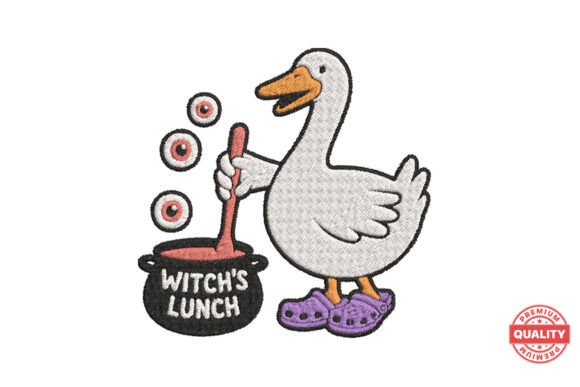
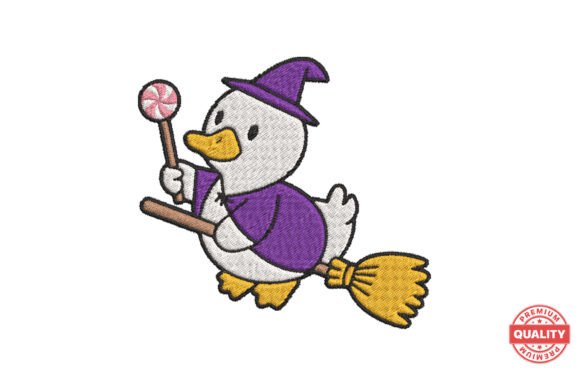
The Wizard Duck on Broom is characterized by its playful aesthetic and clear lines, making it suitable for a wide range of applications. However, its effectiveness depends on strategic placement within your product line. For entrepreneurs and marketers, this design serves as a strong candidate for seasonal campaigns, particularly around Halloween or fantasy-themed events. Yet, its appeal extends beyond holidays due to the universal charm of anthropomorphic characters.
When planning your inventory, consider how this design interacts with different substrates. On t-shirts, the design works best when centered on the chest or placed on the upper back. For tote bags, positioning it slightly off-center can create a more modern, boutique feel. Decorative fabric pieces, such as pillow covers or wall hangings, allow for larger scaling, showcasing the intricate details of the duck’s wizard attire and broomstick texture.
Integrate this design into your product development cycle by creating mockups early in the process. Use digital visualization tools to see how the colors of the design contrast with various fabric shades. This step helps in deciding whether to use standard thread colors or customize the palette to match specific brand guidelines or seasonal trends. By visualizing the end result beforehand, you reduce the need for physical prototypes, saving both material costs and time.
Optimizing the Stitching Process
Once the design is selected and the material is chosen, the execution phase begins. The Wizard Duck on Broom design is engineered to be easy to stitch, which implies optimized stitch paths and minimal jumps. However, achieving professional results requires attention to detail during the setup.
- Hooping Technique: Ensure the fabric is drum-tight in the hoop. Any slack can lead to misalignment, especially in designs with fine details like the duck’s facial features or the bristles of the broom.
- Stabilizer Selection: Choose a stabilizer that complements your fabric weight. For stretchy materials like jersey knits used in t-shirts, a cut-away stabilizer provides long-term durability. For woven fabrics like canvas tote bags, a tear-away stabilizer may suffice and offers easier removal post-stitching.
- Thread Quality: High-quality threads reduce breakage and lint buildup. Since this design likely involves color changes to distinguish the duck, the hat, and the broom, use consistent thread brands to maintain uniform sheen and tension.
During the stitching process, monitor the first few runs closely. Even with "easy to stitch" designs, machine tension can vary based on environmental factors like humidity and temperature. Adjusting your tension settings slightly before full-scale production ensures that the satin stitches appear smooth and the fill stitches are dense without being bulky.
Quality Control and Post-Processing
Quality control is a critical step that many creators overlook in their rush to complete orders. After the Wizard Duck on Broom design is stitched, inspect each piece for loose threads, bird nests, or misalignments. Trim any jump threads carefully to maintain a clean finish. For items intended for sale, this level of scrutiny is non-negotiable; it directly impacts customer satisfaction and brand reputation.
Post-processing also involves proper care instructions. Because embroidery adds texture and thickness to fabric, advise customers on how to wash and dry their items to preserve the integrity of the stitches. Including a small care card with your products not only adds value but also reduces the likelihood of returns due to improper maintenance.
Long-Term Asset Management and Scalability
For freelancers and small business owners, digital designs are assets that should be managed with the same rigor as physical inventory. The Wizard Duck on Broom design can be part of a larger collection of whimsical or seasonal motifs. Organize your digital files with clear naming conventions that include the design name, size, and format. This practice facilitates quick retrieval when repeat orders come in or when you want to bundle this design with others for promotional offers.
Consider how this design fits into your long-term content strategy. Bloggers and educators can use the process of stitching this design as a case study for teaching embroidery techniques. Marketers can feature behind-the-scenes content showing the design’s journey from digital file to finished product, engaging audiences who appreciate craftsmanship. By documenting your workflow, you create additional value streams beyond the physical product itself.
Moreover, as your business grows, having standardized processes for handling designs like Wizard Duck on Broom allows for easier delegation. If you hire assistants or outsource production, clear guidelines on file handling, hooping, and quality checks ensure consistency regardless of who is operating the machine. This scalability is essential for transitioning from a hobbyist mindset to a professional enterprise.
Enhancing Creativity Through Constraints
While the design is ready-to-use, do not hesitate to experiment within the bounds of your machine’s capabilities. You might choose to resize the design for smaller applications like patches or keychains, or enlarge it for statement pieces like blankets. Each variation requires recalibration of your workflow, offering opportunities to refine your skills and expand your service offerings.
Additionally, consider combining the Wizard Duck on Broom with other elements. Adding text, such as a name or a short phrase, can personalize the item further. Many modern embroidery machines allow for easy text integration, enabling you to offer customized versions without significant additional effort. This flexibility makes the design a powerful tool for meeting diverse client needs while maintaining operational efficiency.
In conclusion, the Wizard Duck on Broom machine embroidery design is more than a decorative element; it is a functional component of a well-organized creative workflow. By focusing on compatibility, strategic placement, meticulous execution, and rigorous quality control, you can maximize the value of this asset. Whether you are creating for profit, education, or personal enjoyment, integrating such designs thoughtfully ensures that your projects are not only visually appealing but also professionally executed and sustainable in the long run.